Animal Background Scene Clip Art: 30 Instant Habitats for Your Designs
Every designer hits that wall. You have a fantastic concept for a children's book cover, a zoo membership card, or a wild-themed birthday invitation, but sourcing the right background environment takes hours. You need a jungle that doesn't look generic or a savanna that actually looks like Africa. That is exactly why I started using Animal Background Scene Clip Art. It solves the "blank canvas" problem instantly by providing rich, atmospheric backdrops tailored to specific creatures.
This collection isn't just about sticking a panda on a white background. It is about narrative. It is about placing your subject in a context that tells a story immediately. Whether you are a scrapbooker preserving a zoo trip memory or a graphic designer working on educational materials, having high-quality environmental assets at your fingertips changes your workflow entirely.
The Practical Power of Pre-Made Environments
One of the biggest struggles in modern design—whether for web design or print—is maintaining a professional look without spending a fortune on stock photography. This set of Animal Background Scene Clip Art bridges that gap. Because these are high-resolution PNG files (300 ppi), you don't have to worry about pixelation when you send them to the printer for a large poster or a packaging design mockup.
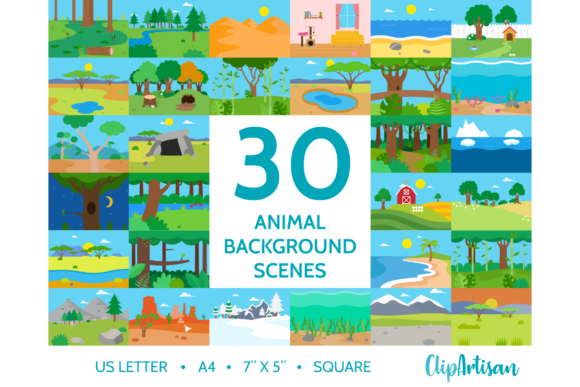
What I appreciate most is the diversity of the biomes included. You aren't just getting a "green forest." You get specific vibes:
- Desert & Arid: The Camel and Vulture backgrounds offer that distinct Mojave or Sahara heat, perfect for travel blogs or geography lessons.
- Aquatic & Marine: The Jellyfish (coral reef) and Alligator (swamp) scenes provide deep blues and murky greens, great for aquarium party invites or marine biology flashcards.
- Urban & Domestic: The Cat and Dog backgrounds feature home and garden settings, which are lifesavers for pet shop flyers or veterinary clinic social media posts.
- Exotic & Wild: From the Gorilla in the tropical rainforest to the Wolf in the Arctic tundra, these assets allow you to create immersive educational posters without ever leaving your desk.
Streamlining Your Workflow with Versatile Sizing
If you have ever tried to resize a standard web graphic for a physical print, you know the frustration of cropping and stretching. This collection eliminates that headache. The creators understood that a social media graphic has different dimensions than a scrapbook page or an A4 worksheet.
Receiving four distinct sizes (US Letter, A4, 7" x 5", and the 12" x 12" scrapbook standard) means you are ready for almost any project dimension immediately. For small business owners and marketers, this is a massive time saver. You can take the Lion background and use the scrapbook size for a poster, then use the Letter size for a flyer, ensuring the visual hierarchy remains consistent without manual resizing.
Real-World Applications for Creators
How do we actually use these in a professional capacity? I have seen these types of assets used effectively in several areas:
- Educational Publishing: Teachers and homeschool parents love these. Creating a matching game where the Monkey card has a rainforest background and the Polar Bear card has a tundra background helps children learn habitats visually.
- Event Branding: Planning a "Wild One" first birthday? Use the Zebra or Elephant African savanna backgrounds for table centerpieces and thank-you cards. The cohesive environment ties the whole party theme together.
- Digital Content: If you run a nature blog or a wildlife Instagram account, these backgrounds are perfect for creating consistent social media graphics. Instead of hunting for new stock photos every week, you can use the Fox woodland background to frame your text quotes or announcements.
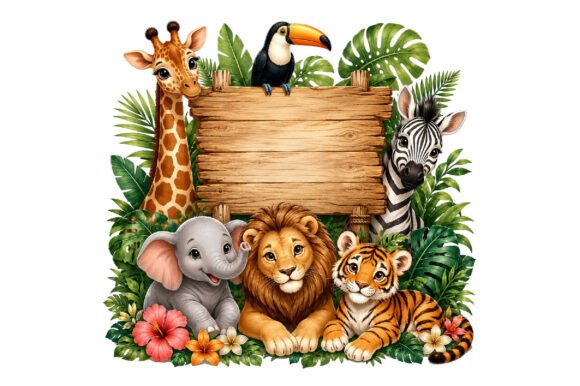
- Scrapbooking: Obviously, the 12" x 12" files are a dream for scrapbookers. If you have photos from a trip to the zoo, pairing your photo of a giraffe with the African Savanna background adds depth and context to your page layout.
Design Tips: Integrating Clip Art with Typography
When you are working with detailed background scenes, your typography choices become critical. You cannot just slap any typeface on top of a busy jungle scene and expect it to be readable. Here is how to handle the visual hierarchy when using this Animal Background Scene Clip Art:
Contrast is King: If you are using the darker backgrounds, like the Owl woodland or the deep sea X-ray Fish stream, you need light-colored text. A clean sans serif font often works best for body text here because the simple letterforms don't compete with the organic shapes of the background.
Use Drop Shadows or Overlays: For headers, a bold display font or script font can look stunning, but you might need a subtle semi-transparent overlay behind the text to ensure the letters don't get lost in the grass or trees.
Consistency in Branding: If you are a pet groomer creating a brand identity, you might choose the Dog garden background for your business card. Ensure that the font you pair with it reflects the same personality. A playful handwritten font suits a casual vibe, while a structured serif font might be better for a high-end animal boutique.
Technical Quality and Usability
Let's talk specs. At 300 ppi, these are premium quality assets. This resolution is the standard for professional printing, ensuring that colors are rich and edges are sharp. Even though they are 12 inches at the longest point, the quality generally holds up if you need to scale them slightly larger for a banner or a sign.
The PNG format is crucial here. It means the files are high-quality raster images. While you can't infinitely scale them like a vector, the resolution provided is more than enough for standard editorial design, flyers, and digital use. The variety of animals is also impressive—it goes beyond the standard farm animals to include unique creatures like the Narwhal, Urial, and Yak, making it a comprehensive library for any nature-related project.
Final Thoughts on Value
For content creators and hobbyists, a resource like this is invaluable. It saves hours of cutting out objects in Photoshop or trying to composite different photos together to create a scene. Whether you are making a calendar for a fundraiser, designing a logo for a wildlife sanctuary, or just having fun with personal art projects, having 30 ready-to-use environments covering everything from the Arctic to the Savanna gives you a creative head start. It is a practical, high-quality toolkit for anyone who needs to bring the animal kingdom into their designs.